
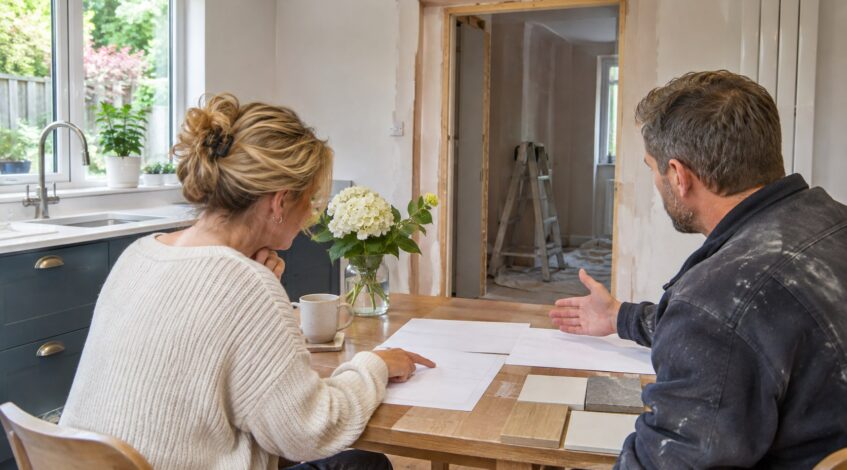
Read a builder’s quote by checking exactly what work, materials and services the total covers, then look for exclusions, allowances and anything left unclear. Ask for missing details in writing before you agree, so you can compare builders fairly and understand where extra costs could arise.
A short quote is not automatically a bad quote, but a single total tells you very little. The aim is to turn broad promises into a clear description of what you will receive.
Start with the scope
Match the quote against your plans and a written list of the work you want. Check that it refers to the correct drawings and includes each room or area involved.
For an extension, look for foundations, walls, roof, windows, drainage and internal finishes. For a bathroom, check whether removal, plumbing, waterproofing, tiling and decoration are included. Words such as “complete” need explaining.
Check materials and finishes
Look for enough detail to understand the standard allowed for. “Supply kitchen” could mean very different things depending on the cabinets, worktops and appliances selected.
Check who supplies fittings and who installs them. If you are buying tiles, taps or flooring yourself, agree who handles delivery, storage, damage and missing parts. Ask whether fitting your chosen products could change the labour cost.
Understand allowances
A provisional sum is generally an allowance for work that cannot yet be fully defined. A prime cost allowance commonly covers the supply of an item you have not selected, but terminology varies, so ask what each allowance includes.
Neither should be treated as a guaranteed final cost. Ask how adjustments are calculated, whether installation is included and whether any builder’s markup applies. Several low allowances can make a quote look cheaper than the likely final bill.
Look beyond the finished room
Check for scaffolding, skips, waste removal, site protection and access arrangements. Ask about protecting existing floors, controlling dust and keeping shared areas usable.
Look for making good after the main work: plaster repairs, painting, skirting boards, flooring edges and disturbed garden areas. For driveways and patios, clarify excavation, the base construction, drainage and disposal of surplus soil.
Check approvals and responsibilities
Planning permission and Building Regulations approval are separate matters, and requirements depend on the work and location. Check with your local council what applies.
The quote should identify who arranges applications, structural calculations, inspections and relevant completion certificates, and who pays the fees. Do not assume that a builder handling construction is also handling every approval.
Read the exclusions and payment terms
Ask specifically about VAT: is it included, excluded or not applicable? Check whether the figure is a quotation for defined work or an estimate that may change, and read any conditions allowing adjustments.
Agree payment stages linked to clear progress. Ask how unforeseen problems, such as hidden damage or unsuitable ground, will be handled. Any extra work should have its scope, cost and effect on timing agreed in writing before it proceeds wherever practicable.
Compare like for like
Put competing quotes beside the same scope and note every gap. A higher total may include work another builder has excluded. Ask each builder to clarify omissions and issue an updated written quote.
Before accepting, confirm the expected programme, insurance, who will manage the job and how defects will be addressed. Keep the agreed quote, drawings and correspondence together as part of your written agreement.
For help working through your plans, get a free estimate from Zeks & Bros.